Agaves have become a familiar sight in landscapes throughout Austin, Lakeway, Bee Cave, and the surrounding Texas Hill Country. With their bold architectural forms, evergreen foliage, and low water requirements once established, they offer year-round interest in gardens designed for Central Texas conditions.
On a recent drive through Rough Hollow in Lakeway, we noticed several attractive examples of agaves used alongside other drought-tolerant plants. These established landscapes demonstrate how choosing the right plants and combining different foliage textures can create a beautiful landscape without relying on seasonal flowers.
Whale’s Tongue Agave: A Standout for Central Texas Landscapes
One of the most striking agaves for Austin-area landscapes is Whale’s Tongue Agave (Agave ovatifolia). Its broad, blue-gray leaves form a distinctive rosette that looks equally at home in a contemporary landscape or a more natural Hill Country setting.
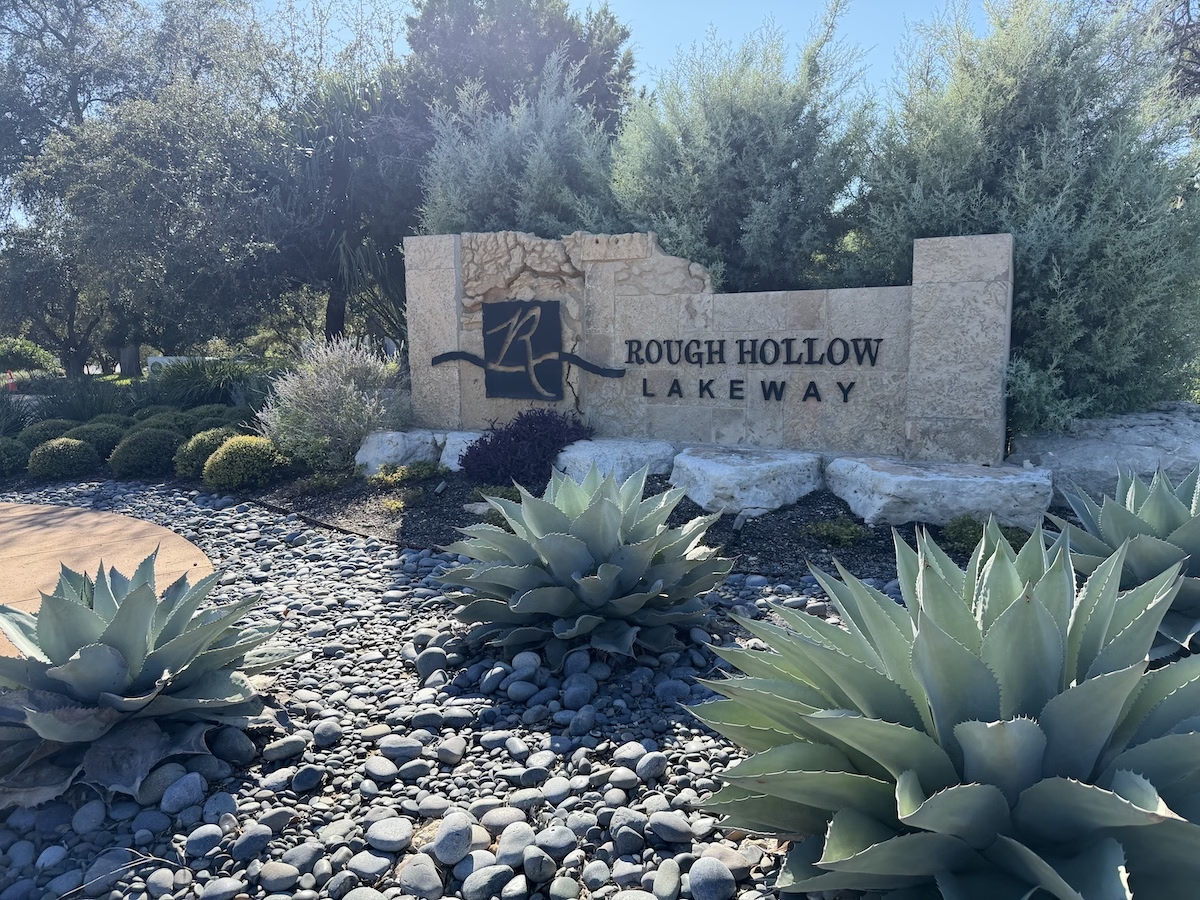
At the Rough Hollow entrance in Lakeway, mature Whale’s Tongue Agaves are planted among river rock, with Arizona Cypress and rounded evergreen shrubs providing a contrasting backdrop.
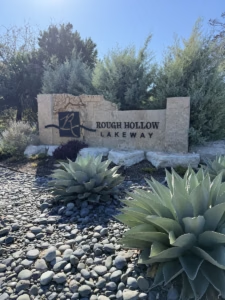 The broad foliage and substantial size of Whale’s Tongue Agave make it particularly effective as a focal point. Unlike smaller agaves, it needs room to develop its full shape, often reaching approximately 3–5 feet across, and sometimes larger under favorable conditions.
Whale’s Tongue is also one of the more cold-tolerant agaves, an important consideration in Central Texas, where winter temperatures can occasionally drop well below freezing. Good drainage remains essential, especially during cold, wet weather.
At Vivero Growers Nursery, our Whale’s Tongue Agaves (Agave ovatifolia) have survived the significant winter freezes Austin has experienced over the past several years. We’ve seen firsthand how well-established plants can handle Central Texas winters, making this agave an excellent choice for landscapes where both heat and cold tolerance are important.
We also carry the beautiful ‘Frost Blue’ selection of Whale’s Tongue Agave, appreciated for its striking blue foliage.
Combining Agaves with Other Drought-Tolerant Plants
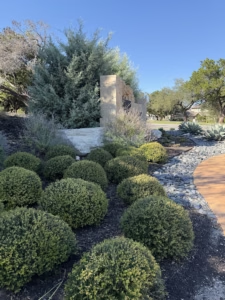 Agaves are especially effective when paired with plants that have different foliage shapes and textures.
Another view of the Rough Hollow entrance shows the contrast between the upright, airy foliage of Arizona Cypress, the neatly rounded evergreen Dwarf Yaupon Holly shrubs, and the sculptural forms of the agaves.
These combinations create interest throughout the year, even when nothing is flowering. The softer shapes of shrubs and trees also provide a visual balance to the strong, pointed leaves of agaves.
A nearby planting offers another good example, with Whale’s Tongue Agave growing alongside flowering yuccas.
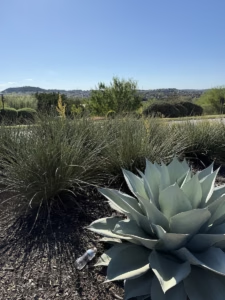 The fine, grassy foliage and tall flower stalks of the yuccas contrast beautifully with the wide, substantial leaves of the agave.
Although yuccas and agaves are different plants, many can be used together in landscapes designed for sun and lower water use.
This combination also demonstrates how plants with very different growth habits can complement one another. The agave provides a strong, sculptural focal point near the ground, while the flowering yuccas add height and movement to the planting.
Together, they create a landscape that feels both structured and natural, particularly well suited to the open, rocky character of the Texas Hill Country.
 Queen Victoria Agave: A Smaller, Sculptural Choice
Not every agave requires a large planting area.
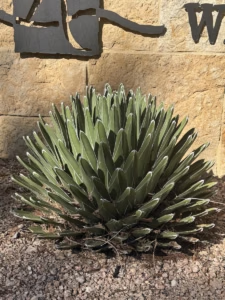
Queen Victoria Agave (Agave victoriae-reginae) is admired for its compact growth habit, dark green leaves, and distinctive white markings along the foliage.
Queen Victoria Agave is similar in appearance to King Ferdinand Agave, with both featuring compact, symmetrical rosettes of stiff green leaves accented by distinctive white markings. King Ferdinand typically has a somewhat more open form and broader leaves, while Queen Victoria is known for its especially tight, architectural shape. Both make striking additions to rock gardens, containers, and smaller landscape spaces.
We photographed this impressive specimen outside Water’s Edge in the Lakeway area.
Queen Victoria Agave typically grows much more slowly than many larger landscape agaves. It requires excellent drainage and should be placed thoughtfully, since its tolerance for prolonged or severe freezes is not the same as that of the more cold-hardy Whale’s Tongue Agave.
Growing Agaves Successfully in Austin
Although agaves are well suited to many Central Texas landscapes, choosing the right planting location is essential.
Good Drainage Is Critical
Agaves generally perform best in soil that drains quickly. Many Hill Country properties have rocky, limestone-based soils that can be suitable, but not every rocky site drains well. Compacted soil and low areas where water collects can cause problems.
Where drainage is questionable, a raised planting area may be a better choice.
Allow Room for Mature Growth
A small agave in a nursery container can eventually become a substantial landscape plant. Consider its mature width before planting near walkways, driveways, entrances, or areas where people and pets regularly pass.
Many agaves have sharp leaf tips, so thoughtful placement is important.
Choose for Winter Conditions
Not all agaves have the same cold tolerance. Some handle occasional hard freezes considerably better than others.
For Austin and the surrounding Hill Country, it’s important to consider the particular species, the drainage of the planting site, and how exposed the plant will be during winter weather.
Water Carefully During Establishment
Agaves are drought-tolerant once established, but newly planted specimens still need appropriate watering while their roots develop.
Avoid keeping the soil constantly wet, particularly during cooler weather. Established plants generally need much less supplemental water than traditional landscape plants.
Choosing Agaves for Your Central Texas Landscape
The agave plantings around Rough Hollow and Lakeway illustrate how these plants can provide lasting structure, contrast, and character in a landscape.
Whether you prefer the broad blue-gray leaves of Whale’s Tongue Agave or the compact, geometric form of Queen Victoria Agave, selecting the right species for your space makes all the difference.
At Vivero Growers Nursery, we specialize in plants suited to Austin and the Texas Hill Country, including native and adapted plants for heat, drought, and challenging growing conditions.
We grow most of our agaves on-site, outdoors in Central Texas conditions rather than relying primarily on plants grown in out-of-state greenhouses. Our agaves experience the region’s intense summer heat, seasonal temperature changes, and natural growing conditions before going into customers’ landscapes. This outdoor growing process helps acclimate them to our local climate, giving customers plants that are already accustomed to the challenges of gardening in Austin and the Texas Hill Country.
Visit Vivero Growers Nursery to explore our selection of locally grown agaves and other plants suited to Central Texas landscapes. Availability varies, so contact us if you’re looking for a particular agave.