We recently found ourselves driving past the West Lake Hills City Hall on Bee Caves Road and were completely stopped in our tracks. The landscaping was so vibrant and perfectly curated that we simply had to pull over, get out of the car, and start photographing.
It wasn’t just a garden; it was a stunning showcase of how Texas native plants can look high-end, architectural, and lush all at once. As we walked the perimeter with our cameras, we realized this wasn’t just a random assortment—it was a carefully choreographed dance of texture and color. Here is the “plant palette” that makes that City Hall landscape so unforgettable:
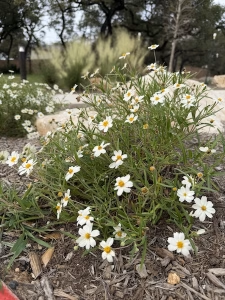
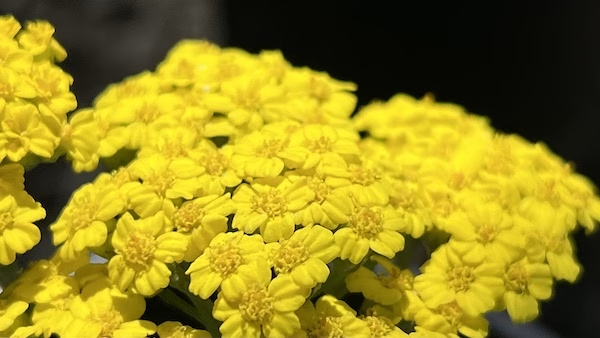
Low-profile and high-impact: Blackfoot Daisies creating a vibrant, sun-drenched border.
1. Rugged Elegance (Flowers & Groundcovers)
- Blackfoot Daisy: This is the quintessential Texas native perennial. It looks like a delicate wildflower with its honey-scented white petals, but it’s tough as nails. It loves the heat and stays low to the ground.
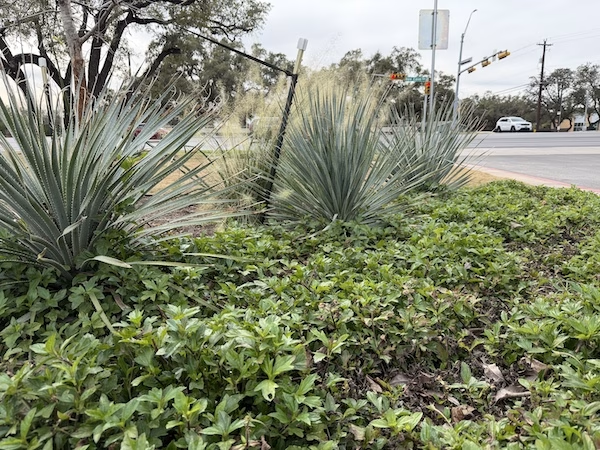
- Woolly Stemodia: This is the “silver lining” of the garden. Its soft, gray-green foliage creates a shimmering carpet that contrasts beautifully against darker greens.
As a Texas native powerhouse, Woolly Stemodia is perfectly adapted to our local climate, offering a water-wise way to add luminosity and soft texture to the landscape.
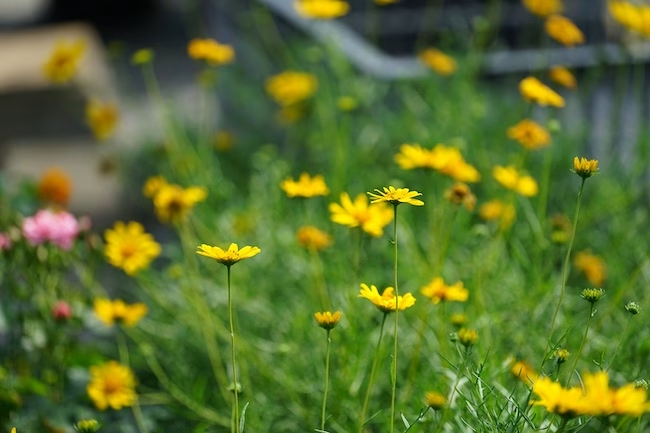
- Wedelia: A vigorous Texan native groundcover with cheerful yellow flowers. It’s excellent for filling in spaces quickly and adding a pop of sun-drenched color.
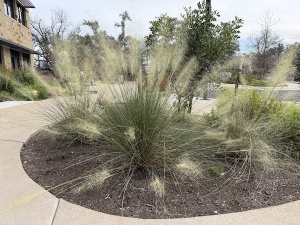
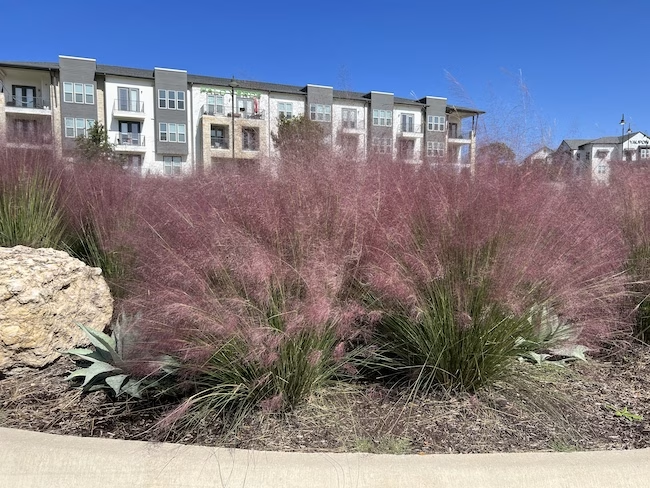
Adding movement and texture: White Gulf Muhly in its prime at West Lake Hills City Hall.
2. Texture & Movement (Grasses & Sedges)
- White Gulf Muhly: While many are used to the pink variety, this native white version offers a dreamy, ethereal cloud-like effect when it blooms. It catches the Westlake sunlight perfectly.
- Berkeley Sedge: This isn’t your average grass. It grows in lush, fountain-like clumps. It’s the secret weapon for designers who want a “meadow” look that stays tidy year-round.
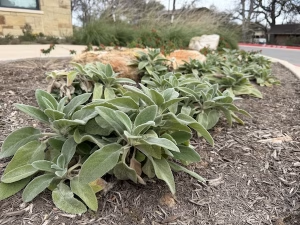
A lush, velvety carpet of Lamb’s Ear thriving in a drought-tolerant Austin garden.
3. The Soft Touch
Lamb’s Ear: You can’t help but want to pet this plant. Its velvety, silver-furred leaves add a unique tactile element to the roadside, softening the harsher edges of the rocky terrain.
While it looks delicate, it is surprisingly drought-tolerant once established—though it appreciates a bit of afternoon shade and well-drained soil to survive our humid Texas summers without melting.
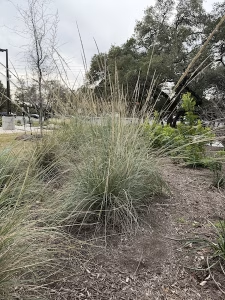
Pine Muhly offers fine-textured greenery that stands tall even in the winter months.
4. Architectural Anchors
- Pine Muhly: A step up in height from the Gulf Muhly, this grass offers fine-textured, upright needles that look like miniature pine branches. It provides great structure in the winter. A resilient Texas native, Pine Muhly is a landscape essential for adding year-round vertical interest and a fine-textured, ‘evergreen’ look that holds up beautifully against our summer heat.
- Soft Leaf Yucca: Unlike its “stabbier” cousins, this yucca has pliable, blue-green leaves that arch gracefully. It gives you that desert-chic look without the danger.
- Desert Spoon (Dasylirion wheeleri): This native is the king of the rocky slope. Its ribbon-like blue leaves and serrated edges create a dramatic “starburst” shape that screams Austin high-end landscaping.
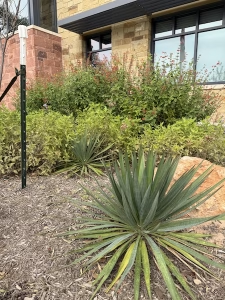
A study in contrast: The vibrant red blooms of Salvia coccinea pop against the architectural, blue-green blades of a Soft Leaf Yucca.
5. The Pop of Color
- Salvia Coccinea (Tropical Sage): To balance all those silvery greens and whites, the bright red blooms of the Salvia Coccinea act as a magnet for hummingbirds. It’s the “exclamation point” of the garden.
This native sage is a relentless bloomer, providing a consistent nectar source for hummingbirds and butterflies from early spring until the first hard frost. It’s famously adaptable, thriving in the harsh full sun of Bee Caves Road while remaining one of the few flowering natives that can still perform beautifully in dappled shade.
Maintenance Hack: To keep your Salvia Coccinea from looking “leggy,” give it a quick trim by about one-third after a heavy bloom cycle. This encourages a fresh flush of green growth and even more vibrant red spikes.
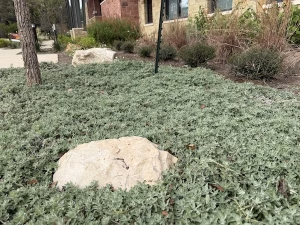
Silvery-gray perfection: Woolly Stemodia softening the edges of a drought-hardy Austin garden.
Why This Palette Works
This specific mix is brilliant because it balances drought tolerance with high-end aesthetics. This balance is the key to ‘Hill Country Chic.’ By pairing the flowing, silvery textures of Woolly Stemodia and Lamb’s Ear with the bold, structural silhouettes of Yucca and Desert Spoon, the design achieves a look that is both wild and refined. It’s a low-maintenance strategy that doesn’t sacrifice visual drama, proving that Texas native plants can hold their own in even the most sophisticated landscapes.
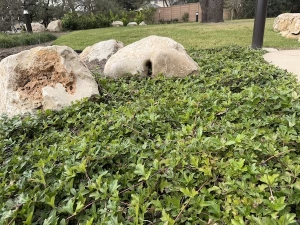
Adding a pop of sun-drenched color: Wedelia thriving as a low-maintenance groundcover.
Pro Tip: If you’re looking to recreate this look at home, ensure your soil has excellent drainage. Most of these plants “get cold feet” if they sit in standing water! The key is drainage and layering. These plants love the sun, but they thrive best when they have room to breathe and rocks to lean against.