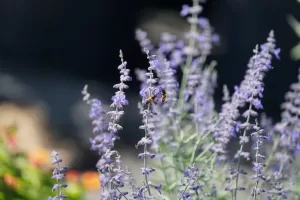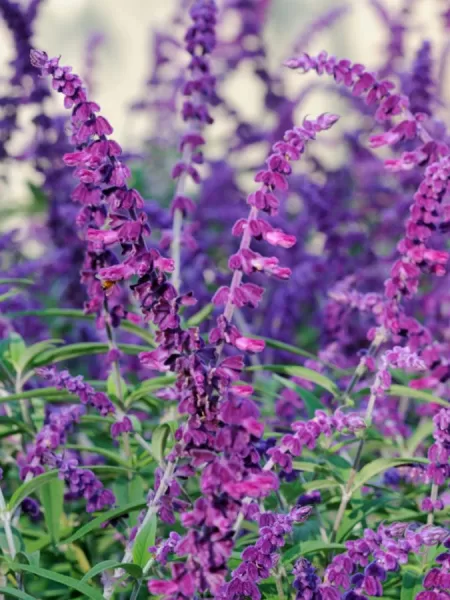
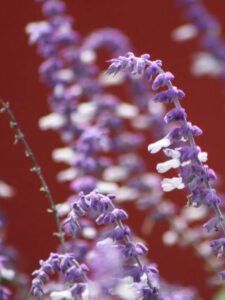
 Generally here in Austin, Lakeway and the Dripping Springs area, the blooms start in the late summer. They continue through the fall. The blooms spikes of the Salvia leucantha are roughly 10″ tall, velvet-like blooms.
Depending on the variety of Mexican Bush Sage you have, the colors are bi-colored purple and white or a solid purple. Butterflies, hummingbirds and bees love the flower spikes. It is a great attraction for the pollinators and butterfly gardens!
Planting and Establishment
- Sun and Soil: When planting Mexican Bush Sage, consider the location. It needs and prefers a full sun spot in the landscape. (That is at least 6 hours here in Austin, Texas). For best results we recommend planting in a well-draining soil.
- New Plants: Water regularly—for the first growing season, check the soil and water deeply as needed (e.g., once a week) to help the roots establish.
- Established Plants: Once established, water deeply but infrequently, allowing the soil to dry out between waterings. Checking the soil a few inches down can confirm if the plant needs a deep soak (e.g., every 2 weeks in dry conditions).
- The Salvia leucantha is considered a drought tolerant perennial once established. As with any drought-tolerant plant, they appreciate occasional deep watering during extreme Central Texas heat waves.
Pruning and Winter Care
When to Prune: The best time for a hard prune in Central Texas is late winter or early spring (often February). Wait until the last hard frost has passed.
How to Prune: Use hand clippers and cut the plant nearly to the ground. Leave a few inches of new green growth if visible.
Why You Prune: This hard cut exposes the core to sunlight, encourages new, vigorous growth, and prevents the plant from becoming woody or leggy.
Winter Strategy: Leaving the dead stems and foliage on during the cold months can provide root insulation and a food source for birds.
What to plant alongside it?
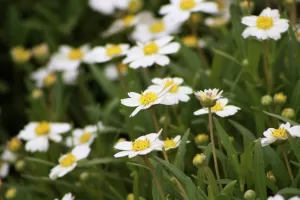
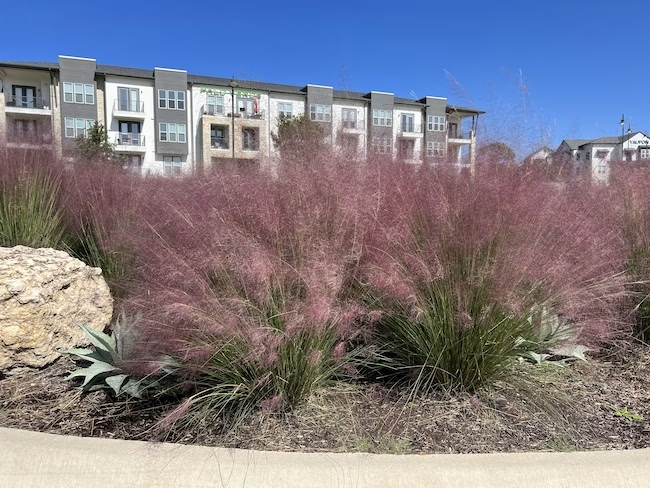
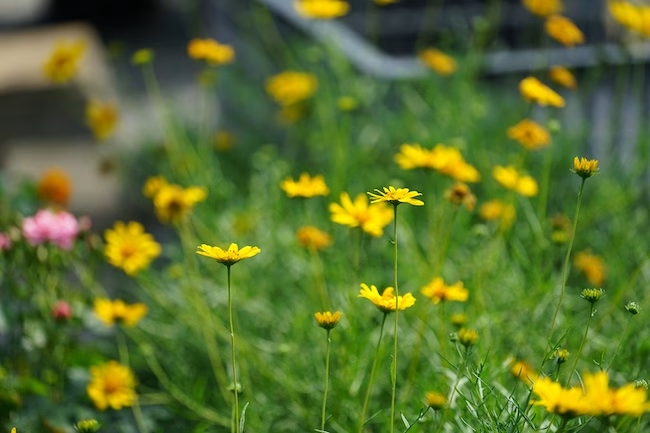
It is not uncommon to see the Mexican Bush Sage planted next to grasses and other fall blooming favorites. Copper Canyon Daisy is an excellent drought tolerant choice. The bright and cheery yellow blooms are a fantastic pop of color next to the purple. (bonus it smells like lemons!!) When planning your garden /landscape design, it is always good to think about things that bloom seasonally. This will ensure you have color throughout the year and not just one season.
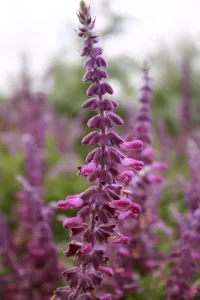
Salvia leucantha ‘Midnight’
Another great choice is the Texas native Salvia greggii. Salvia greggii is available in a multitude of colors, white red, coral, raspberry to name a few. These bloom spring through fall and are a semi-evergreen perennial. A nice choice for color, texture and pollinator attraction to incorporate into your landscape design.
It is important when planning and planting to think about good plant companions.
What does this mean? Match the drought tolerance, soil requirements and care. This is an important step and worth it to take note of complementary colors and blooms times.
Incorporating Evergreens for Year-Round Structure
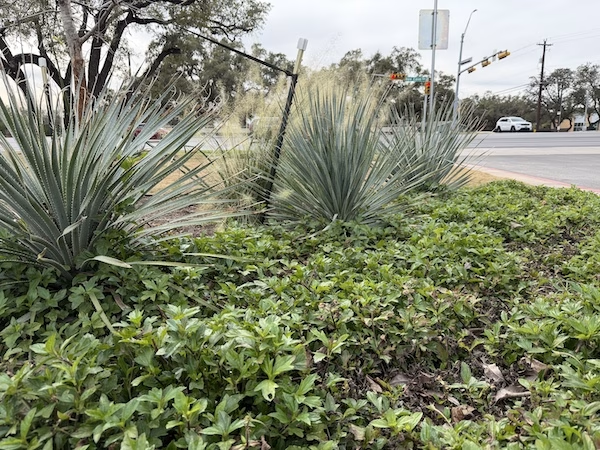
Wanting to add some evergreens? Evergreens are always a good idea. Abelia shrubs come in several color combinations , sizes and bloom colors. Pineapple Guava have silver leaves which look beautiful alongside the Salvia leucantha. In addition to their complimentary leaf color, they produce an exotic red and white bloom that sets an edible fruit behind it.
On the other hand, maybe you want something green and evergreen. Dwarf Yaupon Holly is a drought tolerant low growing plant that is fantastic addition to most any landscape. This is a lower more structured plant that does well in our Central Texas gardens.
Getting overwhelmed with choices? Stop in and let our expert staff help you decide. We have lots of options of plants, evergreens, perennials and grasses to create a beautiful landscape.
Conclusion, you can’t go wrong with the Salvia leucantha. An excellent choice for a tough, drought tolerant, low maintenance plant. Perfect for a butterfly garden or in your landscape to attract pollinators.