
‘Bells of Fire’ Tecoma
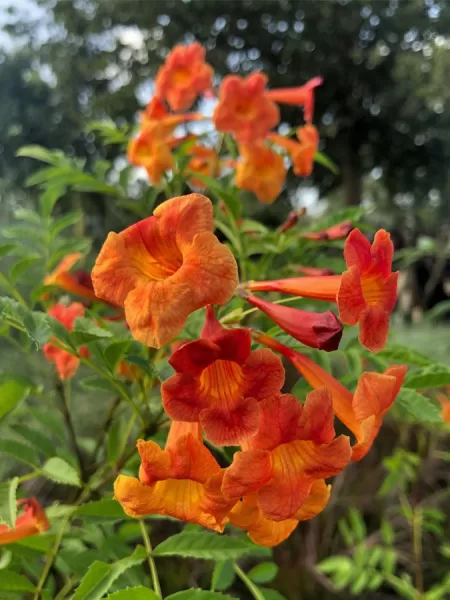
The Tecoma ‘Bells of Fire’ is a tough showy plant that would be a great addition to most any garden, porch or landscape. The ‘Bells of Fire’ is a dwarf version of the classic Tecoma aka Yellow Bells aka Esperanza.
Highlights
Compact size: A dwarf variety perfect for containers or small beds.
Pollinator favorite: High-nectar blooms that attract hummingbirds, bees, and butterflies.
Heat-hardy: Built for the Central Texas climate.
Growth and Habit
Tecoma thrive in Austin landscapes. They handle the intense Texas sun and triple-digit summers with ease. This particular variety of Tecoma is a show stopper. It boasts a burst of color and prolific blooming cycles. The orange blooms are vibrant and add a pop of color to the landscape and garden.
They perform well in pots as well as when planted in the ground. They are a perennial and will die back in the wintertime. In the spring will come back and bloom their little hearts out. The hummingbirds love the Tecoma ‘Bells of Fire’. (For those of you that like to plant to attract the hummingbirds, and honestly, which who doesn’t?)
Sun vs Shade
‘Bells of Fire’ thrives in full Texas sun but can tolerate light shade if necessary. You can read more about them on the Southern Living Plants website. I would like to note they state they are evergreen and here in Austin they would not be. Austin is a zone all it’s own I often say, so I always recommend to do your research and or ask questions before you plant.
If you like the compactness of this Tecoma and prefer the yellow blooms of the Esperanza, there is also a compact yellow variety available, the ‘Lydia’.
The Tecoma are a great choice for Austin gardens and landscapes. Plant it and attract butterflies, bees and hummingbirds.