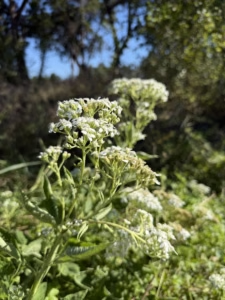
As summer gives way to fall in Central Texas, Frostweed (Verbesina virginica) puts on a beautiful display of delicate white flowers. This Texas native perennial is especially valuable in naturalistic landscapes, shaded garden areas, and pollinator gardens, providing nectar when many other plants have finished blooming.
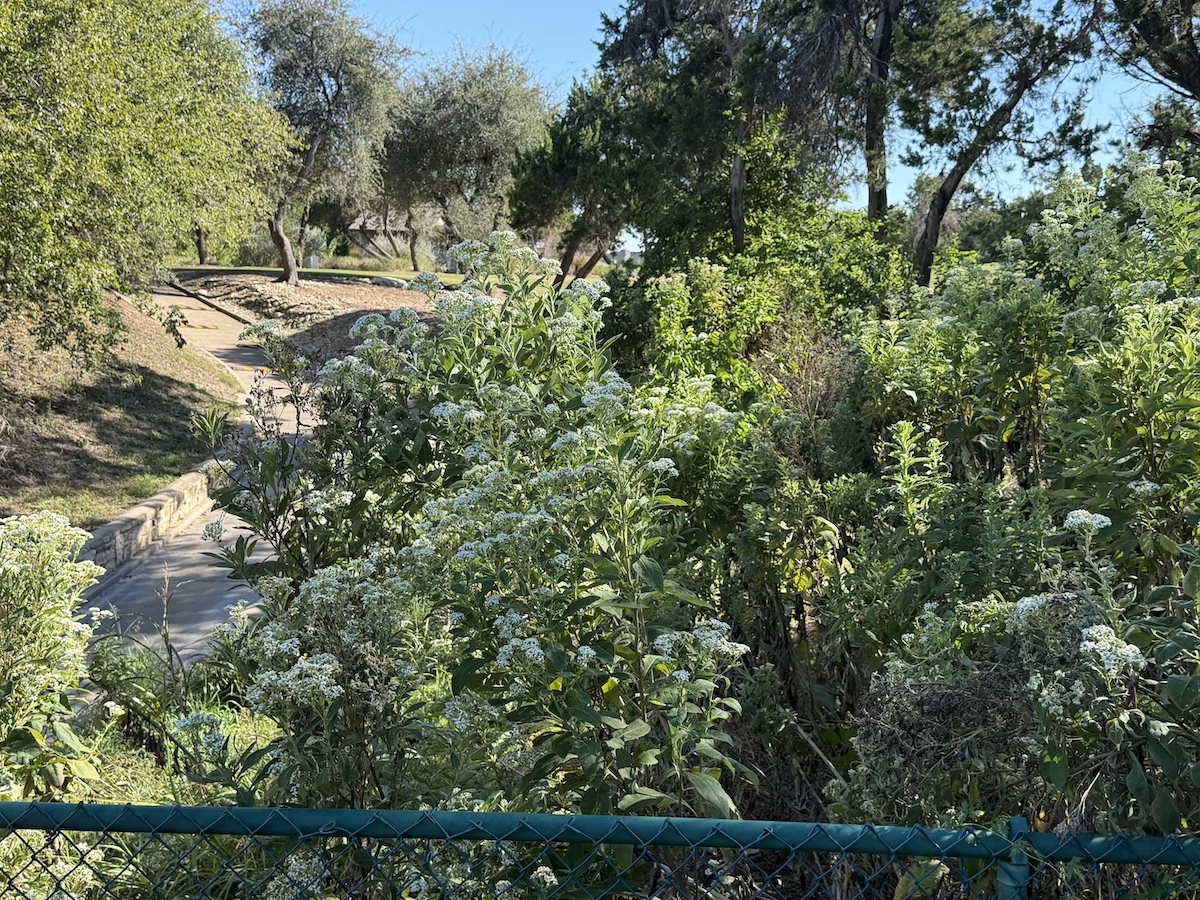
We recently photographed Frostweed growing in Rough Hollow in Lakeway, Texas, where its clusters of white flowers stood out beautifully against the surrounding landscape.
At Vivero Growers Nursery, we grow and sell Frostweed and appreciate both its late-season blooms and its remarkable winter characteristics.
 Growing Frostweed in Central Texas
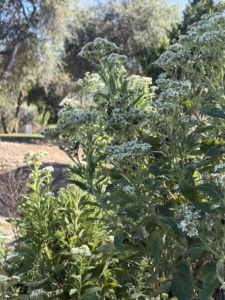
Frostweed is a tall, herbaceous perennial that typically reaches 3–5 feet in height, making it an excellent choice for the back of a perennial border, along woodland edges, or in informal native plantings.
Frostweed grows in sun to shade. We’ve observed it growing successfully in sunny locations in Rough Hollow, while our experience at Vivero has shown that it also performs particularly well with some shade. In hotter, exposed locations, supplemental watering during prolonged dry periods can help maintain its appearance.
Once established, Frostweed can tolerate periods of dry weather, although it looks its best with occasional supplemental watering during prolonged drought.
Because it grows tall and has a naturally loose, branching habit, allow it enough room to develop rather than crowding it into a small, formal planting space.
 A Valuable Fall Plant for Butterflies and Pollinators
One of Frostweed’s greatest attractions is its late-season flowering.
Clusters of small white flowers appear in fall, offering nectar to butterflies, bees, and other pollinating insects. Frostweed is especially appreciated as a nectar source during the fall Monarch butterfly migration through Texas.
Its flowers may be understated individually, but when a mature plant is covered in bloom, the overall effect is beautiful.
For gardeners interested in supporting pollinators, Frostweed provides seasonal interest at a time when nectar-producing plants are particularly valuable.
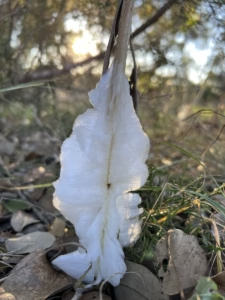
Frostweed forming delicate ribbons of ice during freezing weather in the propagation area at Vivero Growers Nursery.
Why Is It Called Frostweed? The Amazing Ice Flowers
Frostweed has another remarkable characteristic that becomes apparent during freezing weather.
When conditions are right, water moving through the stems freezes as it emerges through small splits near the base of the plant. This creates delicate ribbons and sheets of ice, sometimes called frost flowers.
These formations can resemble curled white petals, feathers, or thin sheets of spun glass.
We photographed one of these extraordinary ice formations on Frostweed growing in our propagation area at Vivero Growers Nursery.
The ice formations are temporary and depend on the right combination of temperature and moisture, making them a special sight during early winter freezes.
See this remarkable winter phenomenon in our short video of Frostweed ice formations.
Where to Plant Frostweed
Frostweed is particularly well suited to:
Sunny to partially shaded native gardens
Woodland edges and informal landscapes
Pollinator and butterfly gardens
The background of mixed perennial plantings
Naturalized areas with room for taller plants
Its upright growth and white fall flowers pair beautifully with other Central Texas native plants.
Frostweed dies back after freezing weather and returns from its roots when growing conditions warm again.
Frostweed at Vivero Growers Nursery
At Vivero Growers Nursery in Austin, Texas, we grow Frostweed for gardeners looking for native plants that bring seasonal interest and support pollinators.
Frostweed’s ability to grow in sun or shade makes it a versatile choice for many Central Texas landscapes.
Whether you’re gardening in Austin, Dripping Springs, Bee Cave, Lakeway, or the surrounding Hill Country, Frostweed is a Texas native perennial worth considering.
Visit Vivero Growers Nursery to learn more about Frostweed and other Texas native and adapted plants suited to our region.