Why the ‘Desert Museum’ Palo Verde is Perfect for Austin Landscapes
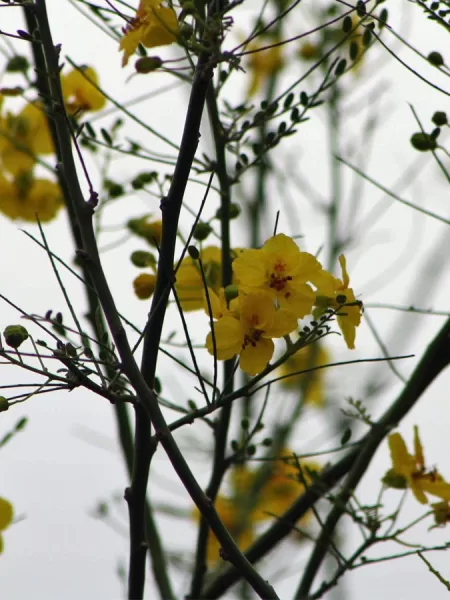
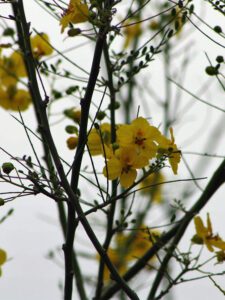
Lately, the Palo Verde ‘Desert Museum’, Cercidium, have been getting a lot of attention here in Austin, Texas. Visible from far away, these stunning trees are loaded with bright yellow blooms.
One of its most striking features is the unique green bark. Interestingly, the name Palo Verde comes from the Spanish words for ‘green stick’, perfectly describing its appearance year round.
Because it is highly popular among local gardeners, the ‘Desert Museum’ Palo Verde has become a popular choice for anyone wanting a deciduous, drought tolerant, and fast-growing tree.
Beyond their seasonal blooms, these trees feature a beautiful wispy look and can reach heights of 20-25 feet. Additionally, they make excellent accent trees even when they are not blooming.
For gardeners in Austin, Texas, the Palo Verde is an excellent choice for the landscape. These trees thrive in full sun and well-drained soil, making them a great choice for our local climate. To ensure long-term success make sure to select companion plants with similar water requirements when planning your landscape.
Comparing the Palo Verde to the Texas Retama
Commonly confused with the Palo Verde, the Retama, a Texas native, also has green bark and yellow blooms. This Texas native tree is easily distinguished by the thorns covering its branches.
For example, the leaves of the Palo Verdes are more compact and resemble the leaves of a Mimosa. In contrast, the Retama leaves, though they resemble the Mimosa leaves, are a bit longer. To the casual observer they are quite similar aside from the thorns. Specifically, the Retama tends to have a more natural free look while the Palo Verde has a more classic shape and form.
Best Companion Plants for Palo Verde
Creating a cohesive landscape means selecting plants with similar water and sun requirements. Beautiful combinations for the Palo Verde ‘Desert Museum’ include:
-
Flowering Perennials: Salvia greggii in red or purple and ‘Mystic Spires’ Salvia for a stunning blue contrast.
-
Evergreen Structure: Dwarf Yaupon Holly provides year-round green to balance the wispy look of the tree.
-
Architectural Accents: Pair with desert-loving plants like Parryi truncata, Artichoke Agave, Queen Victoria Agave, and Candellia.
-
Texture & Movement: Add various Dasylirion and Sotols for a low-maintenance, high-impact finish.
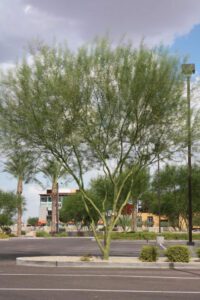
Unique green bark of the Palo Verde ‘Desert Museum’ Tree
Because these selections are all low-water once established and thrive in the full Texas sun, they are incredibly easy to care for. Furthermore, whether you choose to plant you tree alone or alongside perennials and shrubs, the ‘Desert Museum’ is an excellent choice for height, blooms and architectural interest.
Whether you want a striking standalone specimen or a centerpiece for a perennial garden, the Palo Verde ‘Desert Museum’ is a must have for Central Texas.
Stop by our Austin nursery to see these beauties in person!